Why healing isn't linear — And why that's good news
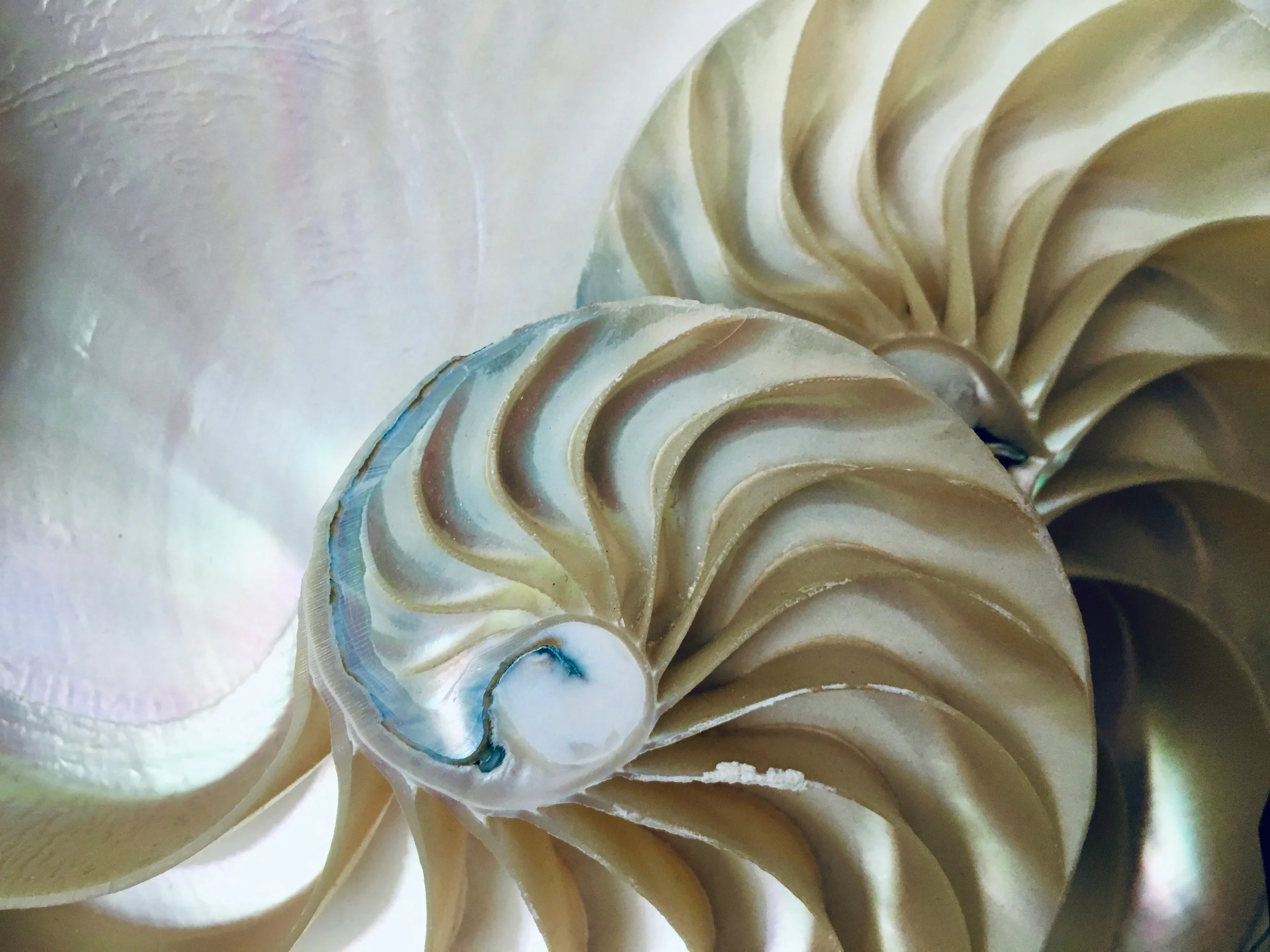
Photo by Giulia May on Unsplash
One of the most disorienting experiences on any genuine healing journey is the moment you realise you are back somewhere you thought you had already left. The anxiety you were certain you had worked through resurfaces. The relational pattern you had named, understood, and sworn off reappears in a new relationship wearing slightly different clothes. The grief you thought had completed itself opens again, deeper than before. And the mind, trained as it is to measure progress in straight lines, interprets this as failure.
It isn't. But to understand why, we need a different map.
The myth of the straight line
The linear model of healing is deeply embedded in Western thinking. You identify the problem, you apply the solution, you move forward. It is the medical model, the self-help model, and to a large extent the therapeutic model. And it is not without value, there are absolutely aspects of healing that follow a relatively straightforward trajectory. But for the deeper work, the work that touches identity, trauma, and the fundamental reorganisation of how a person relates to themselves and to life, linearity is not just an oversimplification. It is actively misleading, because it causes people to pathologise experiences that are actually signs of progress.
What more sophisticated models of human development describe, whether drawn from developmental psychology, integral theory, or the world's contemplative traditions, is something far more interesting than a straight line. Development tends to move in a spiral. You return to the same territory, but from a higher or deeper vantage point, with more capacity, more awareness, more ability to be with what was previously overwhelming. The second time you meet your grief, or your fear, or your sense of unworthiness, you are not back at the beginning. You are meeting it at a new level of the spiral, which is why it can both feel familiar and be genuinely different.
Why the body works this way
The nervous system does not reorganise itself in one clean sweep. It works in layers, which is something that becomes very apparent when you engage in any serious somatic or energetic practice. A pattern that has been held in the body for decades, a chronic bracing against vulnerability, a shutdown response that learned to pass itself off as calm, a hypervigilance so constant it began to feel like personality, does not simply dissolve the moment it is touched. It releases incrementally, in waves, often cycling through intensity before settling into greater ease.
This is not dysfunction. It is the intelligence of a system that knows better than to release everything at once. The nervous system is, at its core, a safety-seeking system, and genuine reorganisation happens at the pace that the system can actually integrate. Pushing faster than that does not accelerate healing. It tends to produce overwhelm, dissociation, or a kind of spiritual bypassing where insight outruns embodiment and the person ends up more fragmented than before.
Holotropic and breathwork traditions have long understood that expanded states, while genuinely transformative, require careful integration to become stable change rather than peak experiences that fade. The same principle applies here. The work is not just in the opening. It is in the slow, patient consolidation of what the opening made possible.

Our clients often use Self Practice as an integration tool.
Integration as the real work
There is a tendency in healing and growth cultures to privilege the dramatic moment, the breakthrough, the cathartic release, the sudden clarity. And those moments are real and they matter. But they are, in a sense, the easy part. What determines whether anything actually changes is what happens in the ordinary days that follow, how the nervous system learns to hold its new configuration under the ordinary pressures of life, how the insights that arrived in an expanded state become the lived reality of a regulated one.
This is why Spinal Energetics is not a single-session fix and has never been presented as one. The work is cumulative because the reorganisation is cumulative. Each session builds on what came before, not because something is being added from the outside but because the system itself is developing a greater capacity to sustain coherence, to return to openness more quickly after contraction, to access dimensions of itself that were previously locked behind layers of protective holding.
Trusting the process is not passive
What changes when you adopt a spiral rather than a linear understanding of your own healing is not that you stop caring about progress. It is that you stop confusing difficulty with failure and familiarity with regression. You begin to develop what the contemplative traditions call equanimity, not indifference, but a quality of steadiness that can be with the full range of experience without collapsing into it or needing to escape from it.
The return of something you thought you had resolved is not the universe telling you that you are broken or that the work isn't working. It is an invitation to meet that territory with everything you have developed since you last visited it. And that, it turns out, makes all the difference.
If you’d like to learn more about the spine and the emotional connection, you can grab a free copy of The Body’s Hidden Messages eBook.